


7 Reasons Why The Ocean Is So Important
On World Ocean Day (8 June), it’s time to celebrate our ocean and to advocate for doing all in our power to protect it. Read on to find out seven reasons why the ocean is so vital.
It literally gives us the air that we breathe
The ocean, and more specifically, phytoplankton, is responsible for about 50% of the oxygen produced on the planet.
Phytoplankton are microscopic plants that live on the surface of oceans and lakes, carried around by currents. They work very similarly to the way that tree leaves do on land – they absorb carbon dioxide and release oxygen.
Phytoplankton and the ocean are literally how we breathe and stay alive!
It regulates our climate
Covering 71% of our planet, the ocean plays a vital role in regulating our climate and mitigating pollutants (though we should, of course, be reducing pollutants in the first place and slowing down climate change).
The ocean is the world’s largest carbon sink (it absorbs CO2) and it takes up more than 90 per cent of the excess heat in the climate system, which helps to regulate temperatures on land. It also distributes heat, salt and organisms through its currents.
The impact of climate change on the health of our ocean has become increasingly evident. The Intergovernmental Panel on Climate Change (IPCC) has found that both surface land and ocean temperatures have become warmer, Arctic sea ice has decreased, sea levels have risen, oceans have become more acidic and have also seen a decrease in oxygen levels.
Whales and dolphins, as well as other marine creatures, make a vital contribution to the long-term storage of carbon in the deep sea and to stimulating CO2 uptake from the atmosphere.
When marine mammals (especially baleen whales) migrate, they excrete nutrients into the ocean. Essentially, they transfer these nutrients from the rich feeding grounds where they’ve spent months to the often nutrient-poorer reproduction areas they’ve moved to.
The nutrients help to stimulate the growth of phytoplankton, which are vital to our ocean and to our planet.
Research also shows that some whales such as sperm whales bring large amounts of iron near the surface through their excretions. Iron leads to an increase in the plankton population, which benefits the whole ecosystem.
You can find out more in our How do whales and dolphins help to protect the climate blog.
It’s home to more than 700,000 biodiverse species
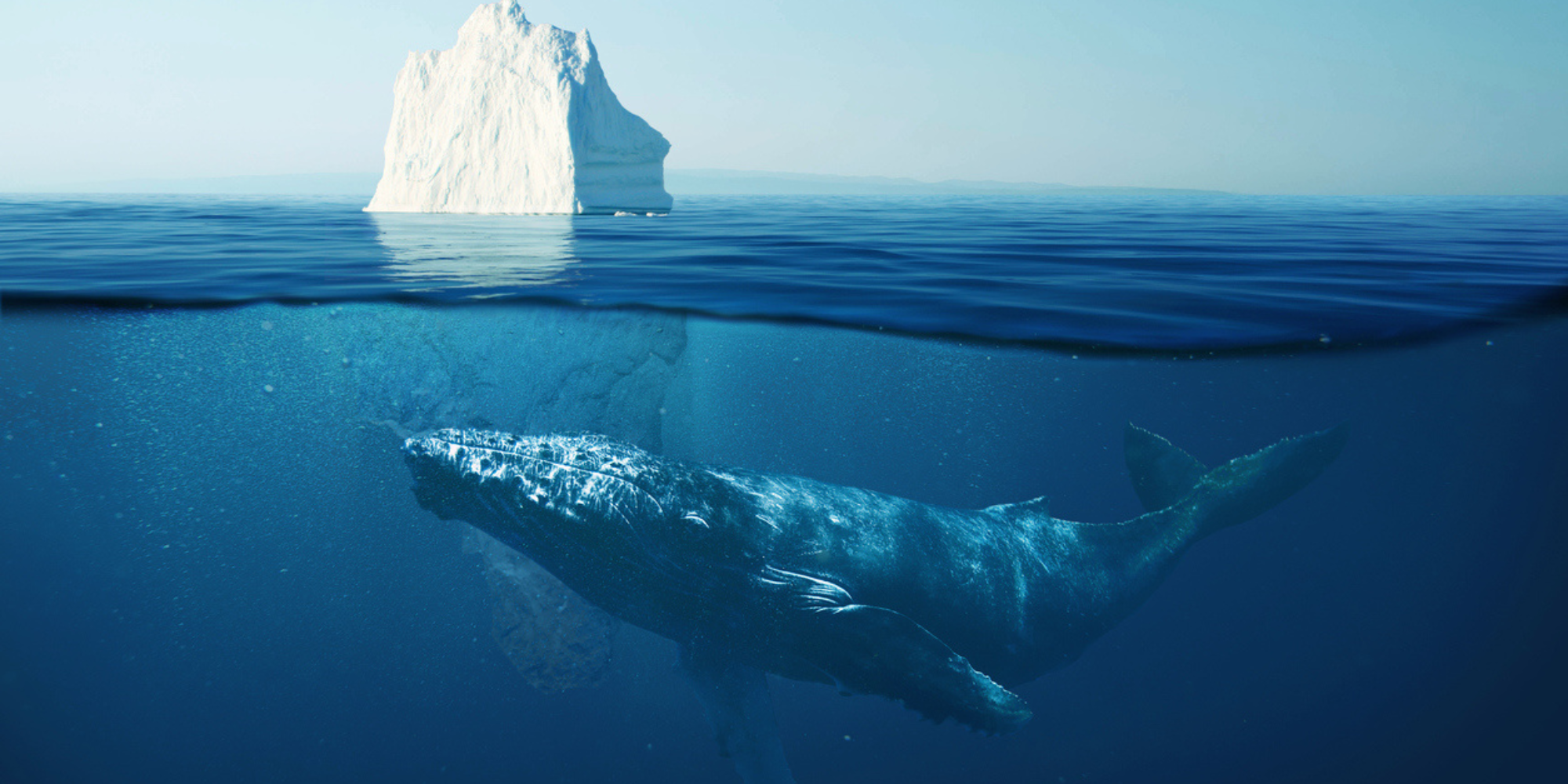
From tiny krill to blue whales and from seaweed to coral reefs, the ocean is home to a huge array of species (estimated to be between 700,000 and 1 million) and is very important for the biodiversity of our planet.
There is a delicate ecosystem at play in the ocean, with food chains and interactions/dependencies between the species. Human interference and the effects of climate change can easily upset and negatively affect this delicate ecosystem.
Many marine species have already adapted their geographic location and their behaviours due to climate change (particularly caused by changes in sea temperature). If we don’t ensure that our ocean stays healthy, we are, unfortunately, going to see some species populations continue to decrease and even possibly become extinct.
It feeds us
Fish accounts for around 15% of the animal protein consumed globally and it’s estimated that the ocean is the primary source of protein for more than a billion people.
To protect our ocean, we need to engage in sustainable fishing practices and move away from overfishing. Eating more plant-based protein in our diets would also help to reduce the demand for fish.
It’s estimated that more than 10 million tons of fish go to waste every year because of destructive fishing practices. Unless we change our ways, UNESCO predicts that more than 50 per cent of the world’s marine species may face extinction by 2100.

It’s important for our leisure
We gravitate towards the ocean to have fun! Whether it’s swimming, surfing, sailing, diving, whale watching or just lazing on the beach, being by the sea is a huge part of our leisure and hobby time. It can also help us to form new communities and find friends who are just as passionate about enjoying and protecting the ocean environment.
It creates economic opportunities and provides employment
Whether it’s companies shipping their goods around the world or a surf school setting up at the coast, the ocean provides lots of beneficial opportunities for our economy and for creating coastal communities. Ocean related activities including tourism, fisheries, shipping, renewable energy and transport also employ many millions of people around the world.
The blue economy is a huge growth area but it is, of course, important that businesses carry out their activities in a sustainable way so they are minimising any impact on our ocean health.
It helps our health and wellbeing
Spending time by the sea, on the sea or even immersed in the sea itself can bring us big health benefits.
In the 18th century, doctors began to prescribe a stay by the sea for those who needed a boost for their health. And many years later, modern day research shows they were on the right track with their advice.
For instance, swimming in sea water has been shown to have benefits for the skin, the immune system and also has been shown to have a positive effect on mental health.
There’s also research to show that sitting and watching the sea horizon and listening to lapping waves is therapeutic, helping the body and mind to slow down and relax.
Deep dive into...Common dolphins
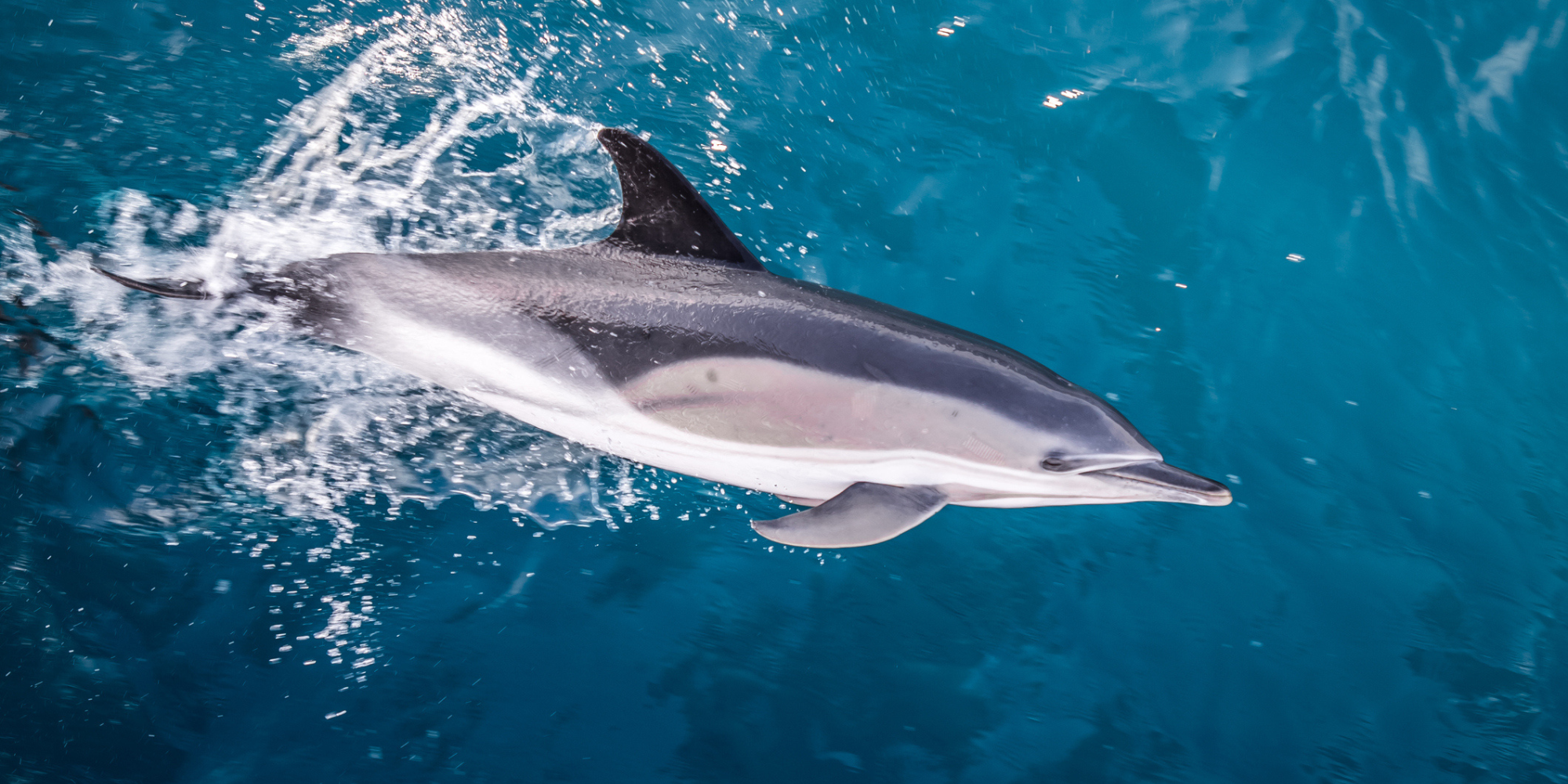
Common dolphins (Delphinus delphis) are often spotted in large groups and are highly sociable.
Slender in size, they’re easily identifiable because of their colour patterns – dark grey/black above and white underneath. They’ve a distinctive hourglass pattern on their sides, with a yellow-cream area starting behind their beaks.
Common dolphins also have dark patches around their eyes and their dorsal fins are tall and triangular, curving slightly backwards. Typically, they weigh up to 140kg and have a length of 2.7 metres. Their average lifespan is 35 years.
As their name suggests, they are one of the most common cetacean species in the world with an estimated population of six million. They are listed as ‘Least Concern’ on the International Union for Conservation of Nature (IUCN) Red List of Threatened Species. However, the Mediterranean population is listed as ‘Endangered’ and the Black Sea population is ‘Vulnerable’.
At one stage, common dolphins were categorised into short-beaked and long-beaked types but in 2015, it was determined that all populations should be more logically grouped under one species called Delphinus delphis, with four recognised subspecies of common dolphins throughout the species’ range.
These are the common dolphin, Eastern North Pacific long-beaked common dolphin, Black Sea common dolphin and the Indo-Pacific common dolphin.
Some differences between short-beaked and long-beaked common dolphins are that the former is relatively heavier, has a larger dorsal fin and flippers and also has a more rounded melon that meets the beak at a sharp angle (making it short-beaked as opposed to long-beaked).
Common dolphins are usually found offshore but do sometimes come closer to shore to feed. They often form superpods – huge groups made up of hundreds or thousands of animals – when they’re out at sea.
The species often approaches boats and ride the bow and stern waves of the vessels. They’re also well known for their energetic leaps out of the water.
Very fast in the water, they regularly reach speeds of up to 55-60 km per hour. Common dolphins are known to be a highly vocal species, producing a range of clicks, whistles and pulses when they are communicating.
Check out this video of a superpod of common dolphins in Monterey Bay, California:
Where do common dolphins live?
They’re found in warm temperate and tropical waters around the world, both in deep ocean waters and offshore regions. They’re less likely to be spotted near to the shore.
What do they eat?
Common dolphins’ prey varies depending on their habitat – some populations feed in productive offshore regions (they concentrate on fish and squid species) but common dolphins living in continental shelf or coastal areas usually feed on schooling fish such as sardines, herring, anchovies and mackerel.
They often work together as a group to herd their prey into a ‘bait-ball’ and are even known to team up with tuna when both species are preying on schooling fish.
Threats to common dolphins
Entanglement in fishing gear
Like other cetaceans, common dolphins can become entangled in fishing gear which goes on to cause injury, fatigue, comprised feeding and sometimes even death.
In several regions, common dolphins’ association with tuna brings them into contact with tuna fisheries and puts them at risk of bycatch (particularly in the eastern tropical Pacific Ocean).
It’s estimated that up to 10,000 common dolphins are killed in the Bay of Biscay each year due to fishing gear entanglement. Recently, a French court made a decision to establish no-fishing zones to protect these dolphins. Find out more in this Environmental Investigation Agency article.

Vessel strikes
Common dolphins are at risk of vessel strikes throughout their range but the threat is much higher in areas with busy ship traffic.
Environmental change and pollution
Climate change and pollution are a threat to all whales and dolphins because of the loss of habitat as waters become warmer.
Plastics and micro plastics, along with chemical pollutants, entering into the water system are a serious threat to all creatures in our ocean.
Common dolphins, like other cetaceans, use noise to communicate and to locate prey. Increased noise pollution from vessels and other human activity interferes with this ability.
Hunting
In 2013, an undercover investigation found that up to 15,000 dolphins a year (including common dolphins) were being hunted by Peruvian fishermen, the catch mostly being used as shark-bait. There have also been directed hunts for common dolphins in Japan.
For many years, Turkish and Russian fishermen caught common dolphins in the Black Sea for meat and oil but this has since ceased.
Captivity
Attempts to take common dolphins from the wild and keep them in marine parks have usually resulted in death. While they are sociable and active in the wild, common dolphins are actually very shy. When kept in captivity, they are prone to illness, shock and/or depression, all of which can lead to premature death.
Natural predators
As with other dolphin species, common dolphins are sometimes the prey of orcas and large sharks. Researchers also believe they may be preyed upon by false killer whales or pilot whales in some areas.

The WeWhale Pod Episode 8 - Hanne Strager
Photo: Paul Nicklen
Our guest for this episode of The WeWhale Pod is Hanne Strager, biologist, whale researcher and author of the recently published book The Killer Whale Journals: Our Love and Fear of Orcas (John Hopkins University Press).
Hanne tells us about her early interest in animals and also how she ended up volunteering to cook on a small fishing boat in northern Norway and how that decided what the rest of her life would be about.
She also shares some of the insights and impressions she gained on her travels over the years to learn more about orcas and the relationships that people have with them. This included travels in Australia, Greenland and to the black market 'whale jails' in the Russian wilderness of Kamchatka.
Hanne also talks about some of the close encounters she's had with orcas and the intriguing connection that humans have with the whale species.
"They are mammals just like us - they live in family groups, they take care of their young, they are affectionate, they are playful," she says.
"There are so many things that I think we recognise from ourselves and still their life is just so different because they live in the sea - it's dark, it's cold, it's hard to understand what kind of life it is and that dichotomy that it's both something we recognise and it's something that's very foreign, I think is part of what makes them so intriguing."
Take a listen to the episode below:
Hanne's book is available now. You can find out more about Hanne's work on her website.
Thanks to Skalaa Music for post-production.
You can listen to previous episodes on our Podcast Page.

Lanzarote participates in Empty the Tanks event against the captivity of dolphins and whales
The annual “Empty the Tanks” event will take place on Saturday, May 13th to raise awareness about the captivity of cetaceans. Animal rights advocates and supporters will gather to demand an end to the practice of keeping these magnificent animals in captivity.
The activity is organised by the NGO “Dolphin Project” worldwide and people all over the world will gather in front of aquatic and marine parks on May 13 and 14, 2023.
The organisers hope that this event in Lanzarote will serve as a wake-up call for policy makers and marine park owners to discuss possible measures to return the animals to their natural habitat or ocean sanctuaries and put an end to their exploitation in captivity.
The company WeWhale with its WeWhale Lanzarote team, dedicated to responsible whale watching and cetacean conservation, has announced its support for the “Empty the Tanks” event and provides financial and logistical support for the organisation of this event in Lanzarote on May 13, 2023.
However, the aim of the protest is to open a constructive way of discussion between the responsible parties in order to evaluate together the release of the captive dolphins in Lanzarote to sanctuaries in their natural habitat little by little.
The event takes place on Saturday, May 13th from 11:00h – 13:00h in front of Rancho Texas. Beside information about the life of cetaceans and the implication of being waxed in tanks, refreshments will be available.
We invite all people of Lanzarote to participate, come and receive valuable information about the life of these majestic animals.
Find out more about Empty the Tanks.

The future of whale and dolphin watching begins in the Canary Islands
The future of whale and dolphin watching begins in the Canary Islands: the first silent and 100% electric catamaran in the European Union inaugurated in Lanzarote by the company WeWhale
After seven months of refurbishment of a 45-foot (almost 14 metres) catamaran manufactured by Astasfersa from 1984, a new era for “La Santa Maria” began on Monday, the 1st of May 2023, as the first 100% electric catamaran without emissions, creating low noise and water disturbance and leaving no oil or lubricants in the sea.
The boat is specially refurbished for whale and dolphin watching under the Spanish flag.
The vessel has about 108 square meters of space and is equipped with a hydrophone and special cameras on board to offer an experience beyond a simple sighting tour with a focus on creating a deeper connection and understanding among humans and the animals found in the Canarian waters.
Founder of WeWhale, Janek Andre, said: “We are more than happy to take the first step in creating an innovative concept for the future of whale and dolphin watching, without disturbing the animals, without polluting the ocean, and on personalised trips with a maximum of 12 people on board where customers truly learn about the animals.
“Lanzarote with its concept of more sustainable and responsible tourism, as well as being a lucky island with several species of cetaceans throughout the year, seemed like an ideal place to launch our first boat in the Canary Islands.”
At least 30 species of cetaceans in the Canary Islands
At least 30 species of cetaceans in the Canary Islands make it one of the places in the world with the greatest diversity of cetaceans and the largest in Europe. With such an impressive variety of species, it is not surprising that whale and dolphin observation trips are a very popular activity in the Canary Islands.
However, recent studies have highlighted the negative impact of the constant noise of boats on these majestic creatures.
Gonzalo Apesteguía, Tour Lead and Skipper of La Santa Maria in Lanzarote, said: “At WeWhale, we are betting on a different concept – with silent engines, an on-board hydrophone, and a guide explaining biodiversity, the trip becomes a cetacean masterclass with the live experience at sea.”
Tadeo Fittipaldi, who is responsible for the refurbishment of the boats within WeWhale, said, “La Santa Maria is just the beginning – we are already researching more sites to continue implementing more sustainable boats and leading this change in an industry that still operates as it did 30 years ago.”
Find out more about our Lanzarote whale and dolphin observation experiences.

The WeWhale Pod Episode 7 - Nadea Nabilla
Our guest for this episode of The WeWhale Pod is Nadea Nabilla, Co-founder of Azura Indonesia.
The initiative focuses on converting traditional Indonesian fishing boats to being 100% solar powered, which is more sustainable, environmentally friendly and cost effective than using combustible engines.
Nadea, who first studied electronic engineering, is also a passionate advocate for our ocean, and has a huge love of scuba diving.
Take a listen to the episode below:
You can find out more about Nadea’s work on Instagram. Thanks to Skalaa Music for post-production.
You can listen to previous episodes on our Podcast Page.
Whales That Made a Mark on the World: The Thames Whale
In our fourth blog on whales who captured the attention of the world and the hearts of people, we take a closer look at the Thames Whale.
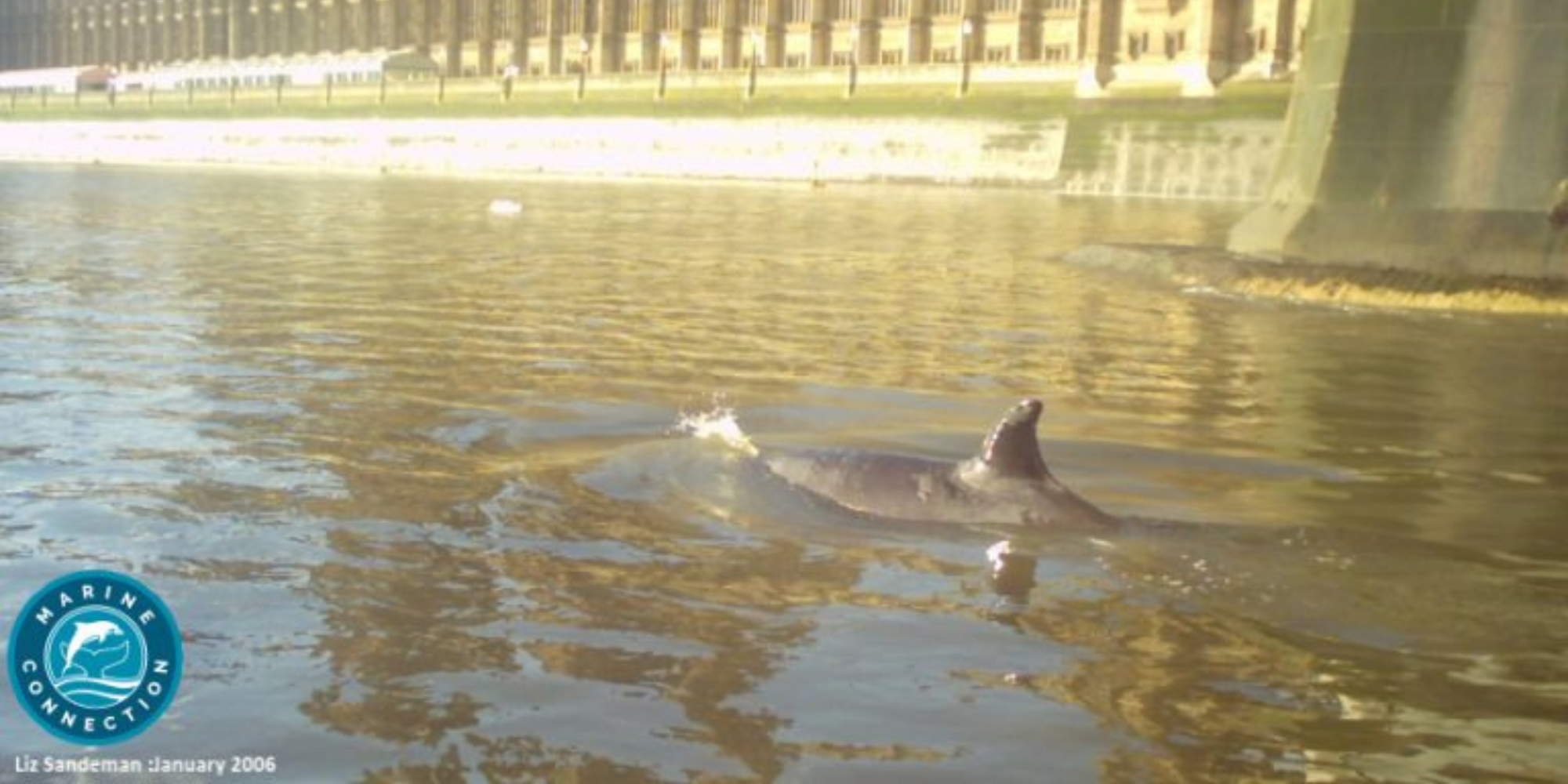
Over the years, a few whales have taken a wrong turn and travelled up the river Thames in London. But the most memorable occasion – which had millions of people transfixed – was in January 2006 when a northern bottlenose whale appeared in the river.
First sighting
A report was first received on the evening of 19 January of two whales going up the Thames but only one was spotted afterwards and it was soon thought to have gone back to the sea.
However, the next morning, members of the public reported seeing a whale going up the river near Waterloo Bridge.
Northern bottlenose whales are usually seen in the north Atlantic off Norway and also off northern UK and Ireland in the summer months.
This whale should have been in the North Sea but had taken a wrong turn into a major river through a capital city. Not something that Londoners would see every day!
Rather than being in the saltwater it was used to in the sea, it was now travelling through freshwater. Northern bottlenose whales look like very large bottlenose dolphins and are usually quite inquisitive, interacting with boats.
The whale – thought not to be fully grown yet – was initially observed to be in good health, was breathing normally and seemed quite relaxed.
However, experts were concerned that it mightn’t make its way back to the sea under its own steam and that it could become beached or stranded in the river.
Indeed, at one stage early on, the whale came close to becoming beached on the riverbank but a few members of the public jumped into the river, splashing around to encourage it to move back into deeper waters.
The media quickly covered the story of the whale, who was affectionately named ‘Willy’ by the public though it later turned out to be a female rather than a male.
Dangers to the whale
There was concern that boats in the river were a threat to the whale, because of possible collisions and because engine noise could disorientate the animal. At one point, vessel traffic was halted on the river, the first time that had happened in London since Winston Churchill’s funeral.
Thousands of people lined the banks of the Thames to catch a sight of the whale and some were treated to the sight of it spouting through its blow hole.
As the day of 20 January went on, the British Divers Marine Life Rescue organisation released a statement saying Willy was showing increasing signs of poor health and that because there was currently a flood tide, the whale could become stranded when the tide changed.
Rescue attempt
As a new day dawned on 21 January, millions of people around the world followed the rescue journey of the whale via rolling TV news, radio and the internet. Collectively, everyone kept their fingers crossed for a good result for the Thames Whale.
Unfortunately, the whale showed signs of fatigue and inability to swim against the tide. The rescue team made the decision to use low tide to beach the whale on a sand bar on the southern banks of the Thames.
After assessment, the animal was refloated on specialist inflatable pontoon equipment in an attempt to travel out to sea and release her.
Sadly, her condition deteriorated further on this journey out to sea. Preparations were made for euthanasia but the whale passed away naturally. It was a sad outcome for everyone who had been involved in and witnessed the rescue attempts.

What happened next?
Veterinary experts from the Zoological Society of London carried out a post-mortem examination. It revealed that the whale was a juvenile female, less than 11 years old, and measured 5.85 metres in length.
She died as a result of a number of factors including muscle damage due to the stranding, severe dehydration and organ failure. She had not been suffering from a disease to cause her to become disorientated.
“Sadly, as is the case with many stranded whales and dolphins, a combination of factors was likely to be the cause of death,” said Paul Jepson, who carried out the post-mortem.
“Those factors include severe dehydration, some muscle damage, and reduction in kidney function. The animal, once entering the North Sea, would not have been able to feed, and this is the likely cause of the dehydration.”
Since 1913, scientists from the Natural History Museum have had priority access to the carcasses of whales, dolphins and porpoises that wash ashore on UK coastlines. Many of them aren’t in good enough condition for post-mortem exam and most end up going to landfill for disposal as it isn’t possible for the Museum to collect every specimen.
In this case, though, the Museum prepared the whale’s skeleton for scientific study and it was also on display to visitors on several occasions.
Why the Thames Whale made such an impact on people has been explored over the years – some say it is a reminder to everyone that the wild is not so far from our own doorsteps and that the whale’s experience is emblematic of the state of the world’s oceans.
At the time, Paul Jepson said, “The Thames whale has demonstrated the tremendous interest and wonder expressed in whales and dolphins by the global public, and hopefully highlights the need and desire to conserve wildlife species in general.”
Ten years after the Thames Whale appearance, there was a commemorative march in London, organised by artists. The group said that a decade on, they wanted to celebrate the whale and help its memory to survive as they knew it was important to so many people.
Check out previous blogs in the series:
Whales That Made a Mark on the World: Keiko

Deep dive...into Right whales
A type of baleen whale, right whales have three different species – the North Atlantic right whale (Eubalaena glacialis), the North Pacific right whale (Eubalaena japonica) and the Southern right whale (Eubalaena australis).
While the three species differ genetically and are found in different parts of the world, they don’t differ significantly in their appearance. Weighing in at up to 100 tonnes, right whales are typically 13 to 17 metres long. Females are usually slightly larger than males.
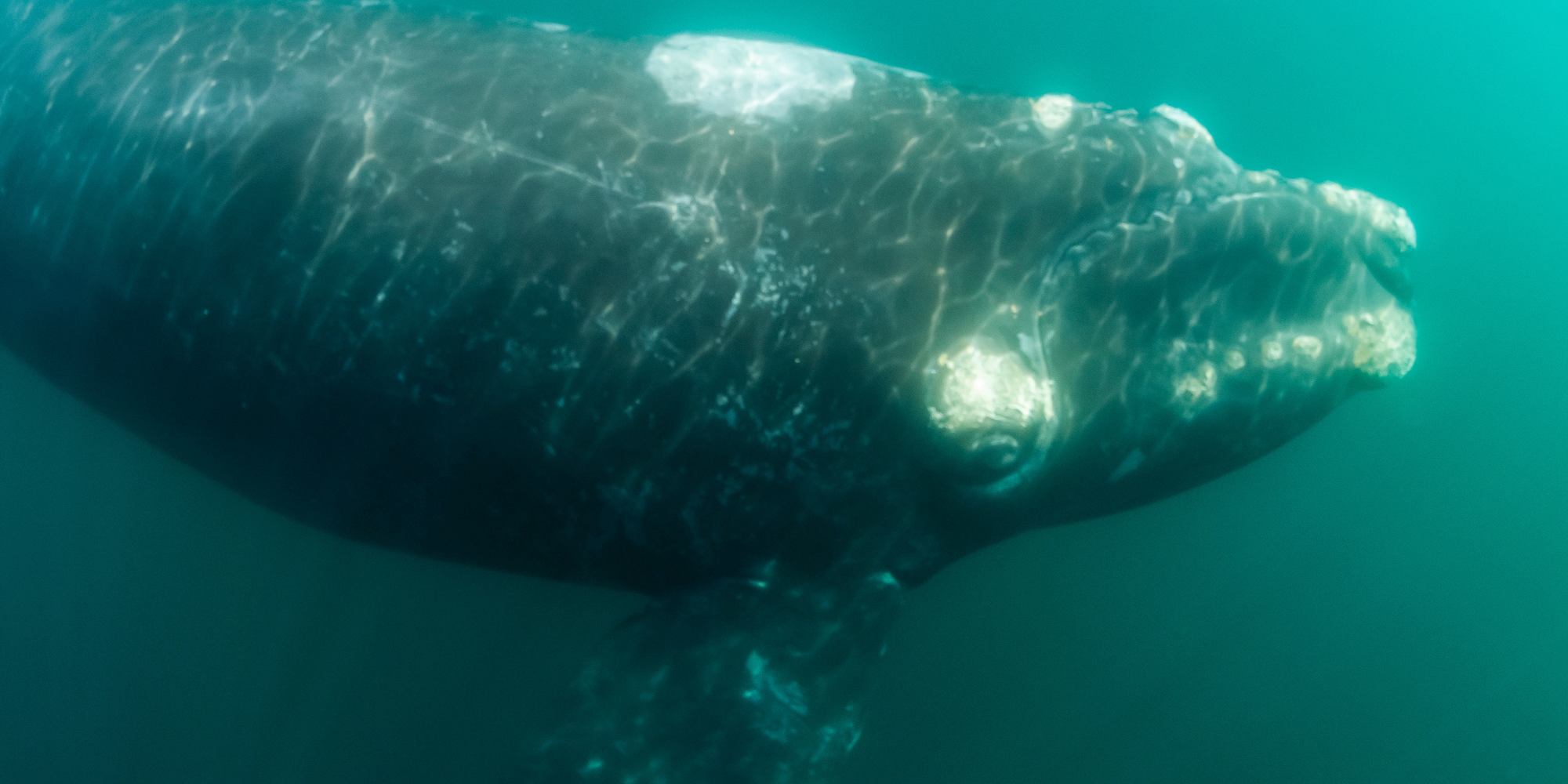
Right whales have stocky black bodies with no dorsal fins and their tails are broad and all black. When it comes to their bellies, they’re either all black or have irregular white patches. The species also has arching rostrums and relatively short paddle-like pectoral fins.
A distinctive feature of right whales is the patches of rough thick skin that appear on their heads. Called callosities, these have a white appearance as it’s actually whale lice that is covering up otherwise black skin. Callosities help researchers to photo identify individual whales and to track them over the years, helping to increase our knowledge of right whale populations and their behaviours.
From a distance, the tall V-shaped blow of right whales could easily be mistaken for that of a humpback whale but up close, their appearance (particularly the callosities) distinguishes the right whale from their fellow baleen whale.
It’s long been said that the right whale’s name comes from the time when whalers considered them the ‘right’ whale to hunt as they were easy to catch (moving slowly and staying close to the coast) and yielded large amounts of oil and blubber.
However, as pointed out in Leviathan: The History of Whaling in America, some people who have studied the issue have pointed out that the word ‘right’ in this context might just have meant ‘true’ or ‘proper’, as in ‘typical of the group’.
When it comes to life span, scientists believe that right whales can live to at least 70 years of age. Scientific monitoring of the species is relatively recent, though, so more research needs to be done.
Where do right whales live?
Right whales migrate every season between summer feeding grounds and winter breeding grounds (where they calve and mate).
The North Atlantic right whale is found along the eastern coast of the U.S. (particularly off New England) and Canada, and their summer feeding grounds extend north to the Scotian shelf and the Bay of Fundy. They head to the warmer waters off Georgia, North and South Carolina and Florida in the winter.
Southern right whales are found in the southern hemisphere – feeding in the sub-polar waters around Antarctica and migrating to the southern costs of South America, Southern Africa, New Zealand and Australia.
Little is known about the migratory patterns of the North Pacific right whale but they follow the general pattern of spending summer in far north feeding grounds and heading south to warmer waters (like those off southern California) during the winter.
There are two populations of the North Pacific right whale – a western population found off the coasts of Russia and Japan and an eastern population found mostly in the eastern Bering Sea. A few individuals have also been sighted in the northern Gulf of Alaska, south of Kodiak Island.
The eastern population is thought to number no more than 50 whales, making it one of the smallest known populations of whales in the world.
Behaviour
Common right whale behaviours include breaching, swimming with their rostrum out of the water as they skim feed on plankton, and socialising at the water’s surface.
Like other types of whales, right whales use song to communicate – mostly using low frequency moans, groans and pulses.
Population
Right whales were hunted to the brink of extinction during the centuries of commercial whaling and North Atlantic and North Pacific right whale populations have never recovered from this massive depletion.
The critically endangered North Atlantic right whale is at its lowest point population-wise in 20 years. The latest estimate suggests there are less than 350 individuals remaining in the world.
The North Pacific right whale is listed as endangered on the IUCN Red List. Data is limited for the species but estimates suggest 300-400 whales in the western population and up to 50 in the eastern population.
Most Southern right whale populations are, encouragingly, now on the increase. They are designated Least Concern on the IUCN Red List. Estimates put the population at 10,000 to 15,000.
What do they eat?
Like other baleen whales, right whales strain large volumes of ocean water through their baleen plates, filtering out their food. They mainly eat copepods (tiny crustaceans), plankton and krill.
They pick up their food throughout the ocean – heading to the seafloor, eating in the middle levels and also foraging at the surface. Right whales also feed by keeping their mouths open as they move through the water (called skimming).
Threats to right whales
Entanglement in fishing gear
Like other whales, right whales can become entangled in fishing gear which goes on to cause injury, fatigue, comprised feeding and sometimes even death.
NOAA Fisheries and its partners estimate that over 85 per cent of right whales have been entangled in fishing gear at least once. Even if the whale can be disentangled from fishing gear, the time already spent entangled can severely stress the whale, prevent it from feeding and exhaust it.
Scientists believe that chronic entanglements are one reason why female right whales are having fewer offspring and are taking longer to have them.
Vessel strikes
This is a particular risk for North Atlantic right whales, whose habitat and migration routes are close to major ports along the Atlantic coastline and who cross over with busy shipping lanes. Collisions can severely injure or kill whales.
As Arctic sea ice continues to decrease and ship traffic increases in the region, it’s thought that the North Pacific right whale will become increasingly vulnerable to vessel strikes.
Environmental change and pollution
Climate change and pollution are a threat to all whales and dolphins because of the loss of habitat as waters become warmer and resulting pressures on food sources.
Harmful algal blooms have been documented in North Atlantic and Southern right whales, and been identified as a threat to both populations. There’s also concern that algal toxins may be emerging as a threat to North Pacific right whales.
Plastics and micro plastics, along with chemical pollutants, entering into the water system are a serious threat to all creatures in our ocean.
Right whales, like other whales, use noise to communicate and to locate prey and increased noise pollution from vessels and other human activity interferes with this ability.
Take a look at this video from CBS Boston (April 2023) about rescue efforts for a right whale entangled in fishing gear:

The WeWhale Pod Episode 6 - Jennifer Lonsdale
Our guest for this episode of The WeWhale Pod is Jennifer Lonsdale.
Jennifer is a co-founder of the Environmental Investigation Agency (EIA), an international NGO that investigates and campaigns against environmental crime and abuse.
Jennifer has close to 40 years’ experience working in the field, particularly focused on and leading the organisation’s Ocean Campaign. In 2016, she was awarded an OBE for services to the environment, particularly the protection of whales and dolphins.
Amongst the topics, Jennifer talks about how her early childhood in Uganda informed her love of wildlife, how she got involved in witnessing and documenting whale hunts in Norway and the Faroe Islands and how the investigative work of the EIA has helped to create public awareness and to effect change.
You can find out more about EIA’s work on its website. Thanks to Skalaa Music for post-production.
Take a listen to the episode below:
And you can listen to previous episodes on our Podcast Page.
The WeWhale Guide to Whale Watching Destinations Around the World
If you’ve ever gotten to see whales in their natural habitat, you’ll know what an exciting, uplifting and memorable experience it is. And if you haven’t yet gone whale watching, you need to get it on your bucket list asap!
Combining an overseas trip and a whale observation experience makes for a really special holiday. Whether you’re a newbie to whale watching or it’s something that, pardon the pun, regularly floats your boat, we’ve put together 12 of our top whale watching destinations around the world (it was hard to pick just 12 as there are many great locations to choose from!)
Read on to find out why these are such great locations to see whales in the wild, what species you can see and the best time of year to make your trip.
Europe
Tenerife, Canary Islands
In 2021, the Tenerife La Gomera area was declared the first Whale Heritage Site in Europe, reflecting its position as one of the world’s top-rated whale watching destinations and also guaranteeing that whale watching is carried out in a responsible and habitat-friendly manner.
The Tenerife La Gomera area is a marine strip between the two islands of La Gomera and Tenerife (off the west coast). Long before it was named a Whale Heritage Site by the World Cetacean Alliance, it was designated a Special Conservation Area by Tenerife authorities, helping to protect the many animal species in the area and its biodiversity.
Most whales and dolphins can be sighted just 20 minutes off the coast of the island. As the Canaries are volcanic islands, there is great depth just a few metres off the coast for cetaceans to enjoy and to thrive in.
A colony of more than 500 short-finned pilot whales live year-round in these waters. They have unique hunting behaviours which haven’t been observed elsewhere, including deep, high-speed dives to chase and capture squid.
More transient in the waters (and therefore less frequently spotted) are orcas, sperm whales, fin whales, humpback whales, blue whales, sei whales and Bryde’s whales, Blainville’s beaked whales and Cuvier’s beaked whales. You never know when they will pop up their heads in this region’s waters, making Tenerife an exciting place to go whale watching.
When to go?
The mild climate that the Canaries enjoys makes it a year-round whale watching destination.
Húsavík, Iceland
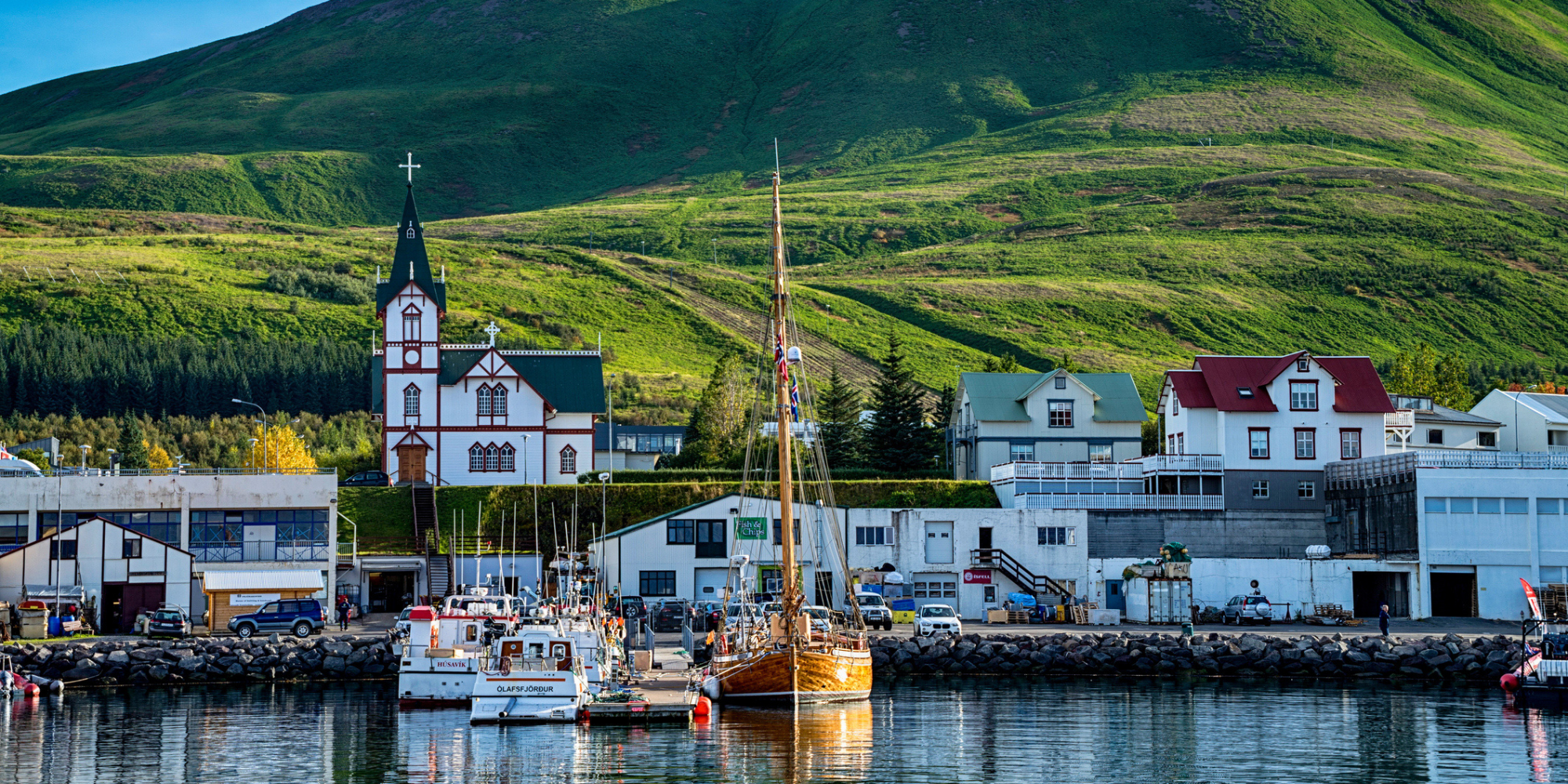
The town of Húsavík in the north of Iceland has really pioneered whale watching in Iceland and we think offers a more unique experience than the more well beaten path to the capital city, Reykjavík.
The cold waters off the coast of Iceland play host to a biodiverse marine life, particularly during the summer months when a range of whale and dolphin species use it as a feeding ground.
Húsavík is located in the beautiful Skjálfandi Bay, where the most commonly spotted whales are humpback whales and minke whales, with sperm whales, fin whales and orcas also putting in appearances. Even the largest animal on the planet, the blue whale, has been sighted in the bay.
When to go?
The best time to spot whales and the most comfortable time, temperature-wise, for a whale observation experience is the late spring/summer/early autumn (April to October). Whale watching experiences in the winter are less frequent but they’re also less crowded and even come with the chance of seeing the Northern Lights.
West Cork, Ireland
The coastal waters off the southwest of Ireland are a summer feeding ground for three types of baleen whales: minke whale, fin whale and humpback whale. This makes whale watching in Ireland some of the best whale watching in Europe, with West Cork being a particular draw for whale and dolphin watching enthusiasts.
Whale watching companies are centred in villages including Baltimore, Courtmacsherry and Union Hall.
To date, 24 species of the world’s cetaceans have been recorded in Irish waters so you’re also likely to see plenty of dolphin species while out searching the horizon for whales.
When to go?
Minke whales usually start arriving off the Irish coast in March and can be seen well into winter (till November). Fin whales traditionally arrive in the late summer/early autumn and humpbacks are a bit less predictable, often showing up in late spring/early summer (April-June) but also known to make appearances later in the summer and into the early days of autumn.
Winter is also a good time to spot whales although it is obviously a colder experience to be out on a whale watching boat during this time and sea conditions can impact if and when tours go out.
Strait of Gibraltar
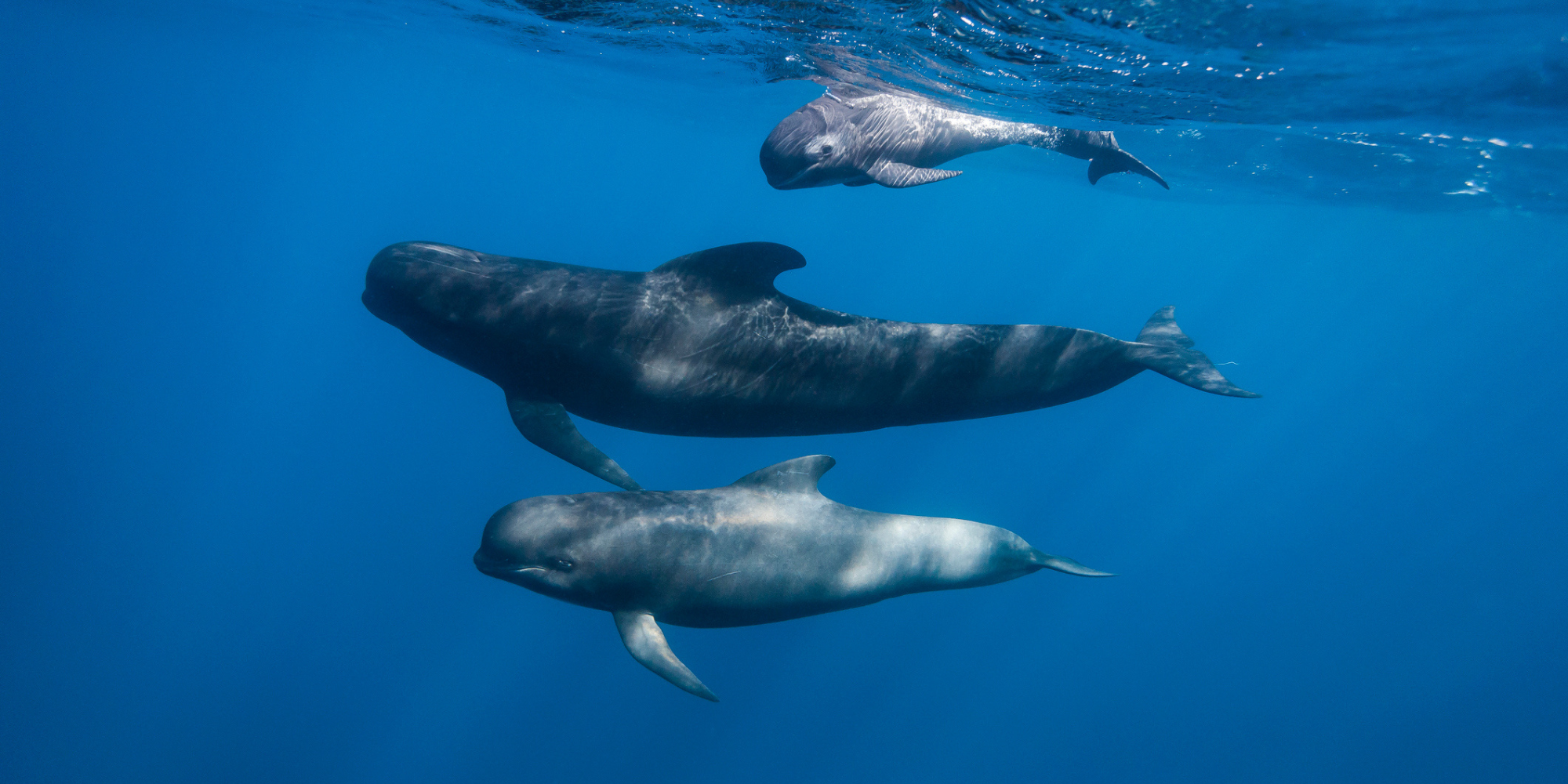
The Strait of Gibraltar is one of the most extraordinary habitats for marine mammals in the world. It connects the Atlantic Ocean with the European Mediterranean Sea and at its narrowest point, it’s only 13 kilometres wide.
The large food supply in the Strait, which is naturally maintained by the opposing currents, ensures that whales and dolphins stay there despite the noise levels from vessel traffic. Also cetaceans often migrate from the Atlantic Ocean to the Mediterranean Sea through the Strait in order to reproduce in a protected environment.
The fishing of tuna attracts a resident group of orcas during summer months. Sperm whales, fin whales and pilot whales are also frequently spotted in the Strait of Gibraltar
When to go?
Pilot whales, along with dolphins, stay in the area throughout the year but other species are more seasonal visitors. Orcas follow the tuna during the summer months so June to August is the best time to visit if you wish to catch a sight of them.
Sperm whales are usually seen between April and August, with fin whales being less predictable when they show up in the Strait.
Australasia
Kaikōura, New Zealand
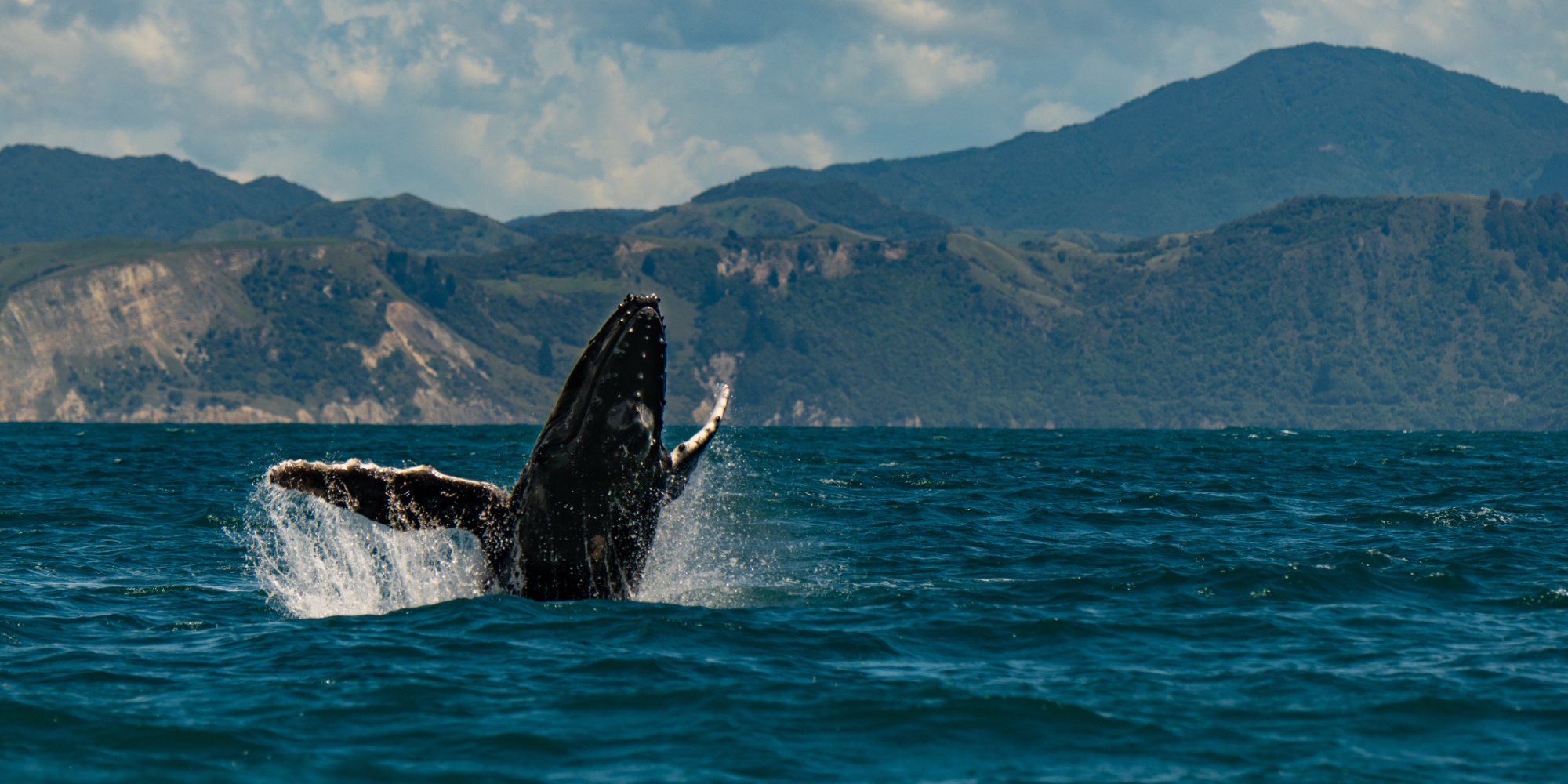
Located on New Zealand’s south island, Kaikōura is an incredibly scenic town and one of the best places to experience whale watching in the world.
The reason why? The Kaikōura Canyon, just off the coast, contains deep trenches and underwater canyons where whales can breed undisturbed. Sperm whales usually inhabit the deep ocean and are rarely seen along coastlines unless there are offshore canyons.
So it’s no surprise then that sperm whales are the primary residents in this region and the species you’re most likely to see on a whale watching tour in Kaikōura. After sperm whales, orcas and humpback whales are most likely to be spotted, and less frequently, you might spot Southern Right whales on their migration, minke whales and long-finned pilot whales.
When to go?
Sperm whales are resident off Kaikōura all year round. Orcas can be seen from November to March (some estimates say they’re usually seen at least two to three times a month during that period) and humpback whales are usually spotted in June and July.
Temperature-wise, it’s warmer to whale watch from October to March which is the southern hemisphere spring and summer. But if you wrap up warm, you can have a great experience in the winter time (June-August).
Hervey Bay, Australia
The town of Hervey Bay in Queensland has been a centre for humpback whale watching for decades and in 2019, it was jointly named the first Whale Heritage Site in the world.
Hervey Bay is an important and protected stopover site for migrating humpback whales, making their way along the eastern coast of Australia.
The waters off Hervey Bay are part of the Great Sandy Strait Marine Park and just a short distance out to sea from the town is the biodiverse Fraser Island (well worth a visit if you’re planning a visit to Hervey Bay).
The humpbacks who visit the bay tend to stick around a while (10 days on average) which means there’s a very good chance of seeing them once they arrive offshore.
It’s thought that 20,000 humpback whales migrate through the region every year with around 8,000 of them using the calm waters of Hervey Bay to rest and nurse their new-born calves before continuing on their migration.
A certain albino humpback called Migaloo has been spotted in this neck of the woods. Also spotted in Hervey Bay are minke whales, Southern right whales and Bryde’s whales, along with a large range of dolphin species.
When to go?
June to November is when the humpback whales visit Hervey Bay and even within that period, early August to late September is the optimum time to see them.
North America
Baja California, Mexico
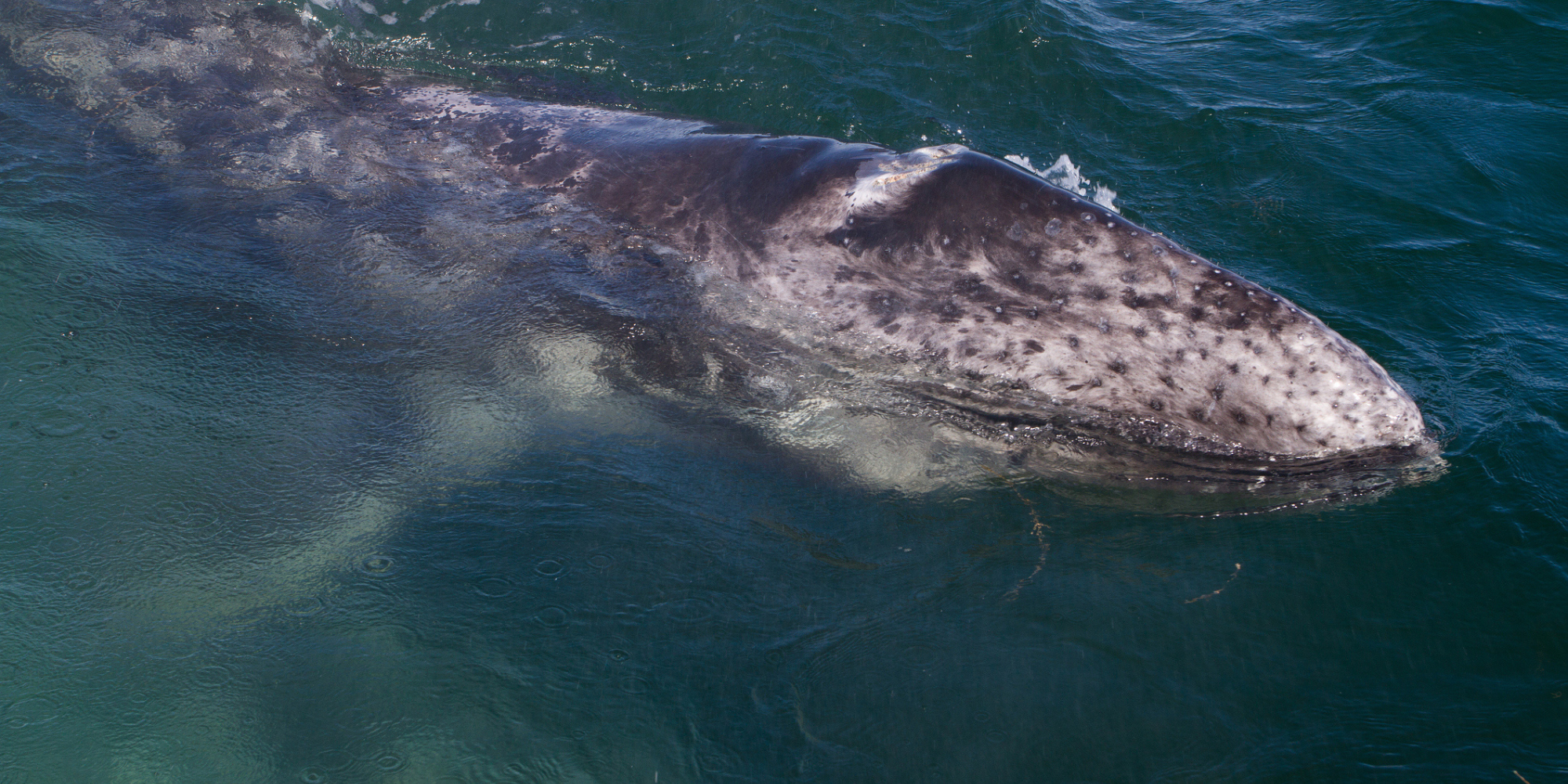
The most northernmost of the Mexican federal entities, Baja California is just across the border from the U.S. It neighbours the Golden State, California.
Sandwiched between the Pacific Ocean to the west and the Sea of Cortez to the east, Baja California is an incredibly rich area for marine mammals, particularly whales.
The whales who frequent this region have migrated south from the freezing Alaskan waters to enjoy the warm welcoming waters off Mexico. It’s here that they mate, give birth and raise their young. On the Pacific coast, the most common species are the humpback whale and grey whale while the Sea of Cortez plays host to humpbacks, orcas and fin whales.
It’s also possible to see sperm whales, minke whales, blue whales and pilot whales though they are more elusive in these waters.
Grey whale observation in Baja California Sur is quite the experience as the whales are very friendly, curious and approach boats seeking out interaction from humans. This is particularly common in Magdalena Bay.
When to go?
Whale watching is a year-round activity in Baja California but if you’re interested in particular species, you can time your trip more specifically.
Grey whales are usually spotted from late December to April, with peak months in February and March. These months are also the best months if you’re looking for blue whales and orcas. Humpback whales are the most commonly spotted whales in Baja California Sur and are sighted from December to April.
Vancouver Island, Canada

You’re spoilt for choice when it comes to species of whales found off Vancouver Island in British Columbia (on the west coast of Canada). Minke whales, grey whales, humpback whales and orcas are found at different times of the year.
There are two resident orca populations found on Vancouver Island that never mingle with each other. One group lives close to the town of Victoria and another group lives further north, patrolling the Johnstone Strait.
In addition, there’s also a transient orca group of 160 whales which travel much further than the resident pods. Vancouver Island is one of the most studied areas in the world when it comes to understanding more about orca whales and the quaint little village of Telegraph Cove on the east coast is one of the best places to go and experience orcas in the wild.
Pacific grey whales migrate north along the west coast of Vancouver Island and many of them stop off to rest in the calm bays and to feed. Humpback whales are usually found to the north of Vancouver Island.
Tofino, a small town on the west coast, is a great place to spot grey whales on their migration and you might also be fortunate to see orcas, fin whales, minke whales and humpbacks here. It’s also a fantastic place to surf, if you fancy catching a wave!
When to go?
March and April are the best times to spot grey whales but they can and do show up a little later into the year. Humpback whales are there during the summer months (May to September).
As a general rule, May to October is the period when orcas are most often spotted off Vancouver Island but that can be narrowed into a peak period of July to mid-September, especially if you’re heading to northern Vancouver Island.
Central and South America
Península Valdés, Argentina
Located in the heart of Patagonia, Península Valdés is a very significant region for the conservation of marine mammals. It was declared a UNESCO World Heritage Site in 1999.
The peninsula includes about 400 kilometres of shoreline and reaches more than 100 kilometres eastwards into the South Atlantic Ocean. The calm gulfs located along the peninsula are key breeding, calving and nursing areas for the Southern right whale.
The species’ population suffered greatly during the years of commercial whaling but thankfully has been increasing in numbers in the past 40 years, thanks to conservation efforts. There has been recent concern, though, that climate change will negatively affect that progress.
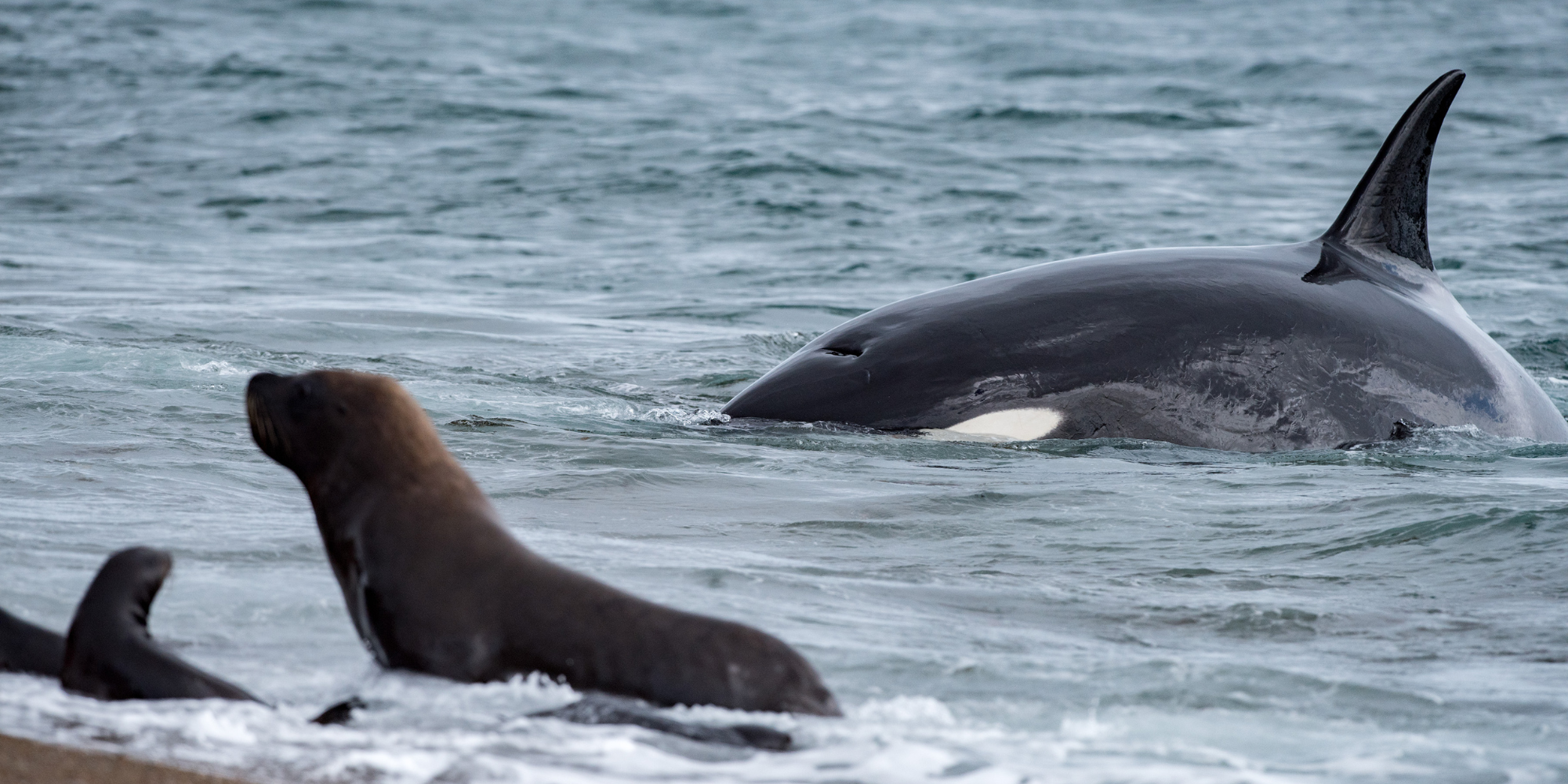
The Península is also well known for orcas who beach themselves on purpose, in order to catch and kill beach-dwelling sea lion pups. The orca aims to successfully catch its prey and then catch the next wave off the beach, using the steep and pebbled beach to roll back to the water.
To view this behaviour, tourists head to a lookout point at Punta Norte during a very short window of time each year and keep their fingers crossed they get to see this unique behaviour.
When to go?
Southern right whales are present in different waves of migration off the coast of Península Valdés from June to December, with the best time to view them in August to October. The peak time for orcas to hunt on the beach at Punta Norte is a 10 to 15 day period, usually in March or April.
It’s also possible to view orcas off the coast but the timing of this can be unpredictable (they are generally around in the waters during their migration between September and April).
Uvita, Costa Rica
Costa Rica in Central America is a fantastic destination to experience whales, with the laid back beach town of Uvita the main place to head to. The town is surrounded by the Parque Nacional Marino Ballena (Marine Whale National Park), created in 1990.
The beach shoreline near Uvita forms into a spit, that looks just like the fluke of a humpback whale. It’s known as ‘The Whale’s Tail’.
One of the reasons why Costa Rica is such a great whale watching destination is because it enjoys two whale watching seasons in a year (most locations around the world only have one season). Northern hemisphere humpback whales head south to the warmer waters of Central America between December and April.
Then between July to mid-November, the Southern hemisphere humpback whales head up from their base in the Antarctic to enjoy the warmer waters too.
When to go?
The whale watching season is almost all year-round in Uvita but the chances are highest between December and April and then again from July to mid-November e.g. May and June are months you are a lot less likely to see humpbacks.
A Whale and Dolphin Festival is celebrated each year at the end of September in Uvita so it’s well worth timing your visit to take part in this!
Antarctica
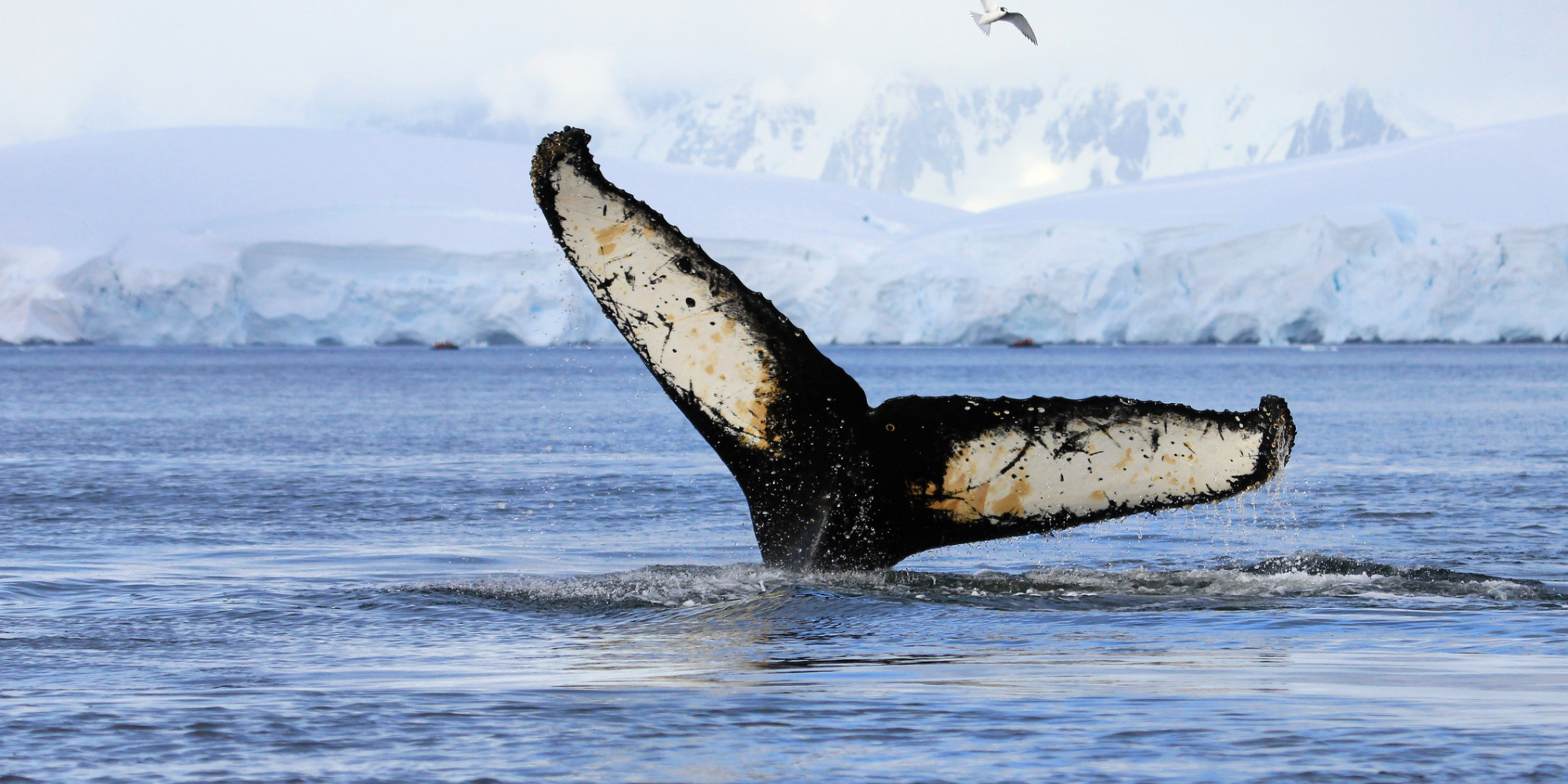
Not the easiest (or cheapest!) destination to get to but if you’re looking for a real whale watching adventure, this is definitely one to consider.
Whale watching in Antarctica usually takes place aboard small zodiac boats but because you’re based on a larger tourist ship (or cruise ship), you’ll be able to cover more ground and have more opportunities for whale sightings.
Up to eight different whale species are encountered in Antarctica – humpbacks (the most sighted), minke whales (the second most), orcas, sperm whales, Southern right whales, sei whales, Antarctic blue whales and fin whales.
It’s a beautiful setting to observe and appreciate whales, with statuesque icebergs in the background, amazing clear skies and a peaceful and quiet environment in this unpopulated region.
Whales are found all around Antarctica but hotspots include the Drake Passage crossing, Wilhelmina Bay (sometimes known as ‘Whale-mina Bay’ due to the number of whales that can be seen) and the Lemaire Channel.
When to go?
The best time to spot whales in Antarctica is February and March, which is just after the southern hemisphere summer when the animals have been busily feeding (after their long migration back).
That means they are usually full of energy, in a playful mood and most likely to be curious about human activity nearby.
Africa
Hermanus, South Africa
Close to Cape Town at the bottom tip of Africa, Hermanus is a brilliant place to observe Southern right whales. They can be spotted very close to land, meaning you can choose from land-based or boat-based whale watching.
The whale species migrates from Antarctica every year, heading northerly into warmer waters to breed and give birth. It’s also possible to see other whale species including humpbacks and Bryde’s whales.
When to go?
Most sightings of Southern right and humpback whales happen between June and October with the best months being August to early October.
Hermanus hosts an annual whale festival at the end of September/start of October each year, attracting around 150,000 people. And interestingly, the city employs a ‘whale crier’ whose main job is to blow a horn to alert people whenever a Southern right whale is spotted!